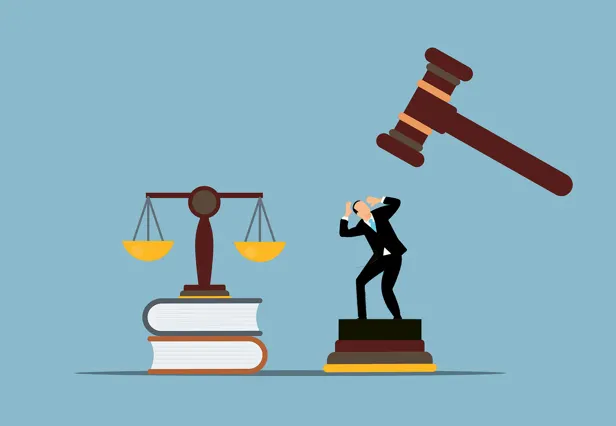
It’s not a thriller line. It’s what a security guard whispered to him — four months after a first assault, in the same waiting room.
A few years ago, an American client told us this true story, which happened in a large insurance company with branches across the country. Since then, we’ve often used it to illustrate how governance blindness looks in real life.
“There are days when your body senses before your mind understands. One morning, I walked into the insurance company I’d been a client of for thirty years. I took a number and sat at the back of the waiting room. My thoughts drifted until something snapped me back. He was there. Standing in front of me. Panic rose instantly. I hadn’t done anything wrong, yet his confidence made me doubt myself.

He wasn’t there when I came in.
But he’s back.
The security guard.
The same one.
The body remembers. The mind doubts.
The same guard from the first incident. It wasn’t the first time he’d crossed a line. A guard has no right to physically engage with a client. They’re certified, regulated, bound by strict rules — including the one that forbids physical contact. And yet.
Four months earlier, same branch, same man. The first assault. I’d been shaken, but adrenaline turned my anger into action. I sent a legal notice to the company’s VP of Legal Affairs. They reacted fast — properly. I was contacted, we talked it through, they acknowledged it, promised new measures. I accepted. People make mistakes. We closed the matter.
And now, much later, another transaction brings me back. I sit down. He approaches. Too close. My body tenses, my brain whispers to stay calm. And then, through his teeth:
‘You… I’m going to get you.’
That’s when everything tilts — into controlled absurdity.
The sound fades, the lights hum too loudly. My heart pounds. My head spins. I tell myself it’s fine — this is America, everything will be fine. I even open my camera, then close it again, finger ready on the record button. I’m scared, but I can’t leave. I’m here for a transaction. My brain shifts into high alert.
My number flashes on the screen. I step forward. He’s in the corner. He lunges — full body. I hit record. Chaos. Two minutes. I shout for him to let go; the more I shout, the tighter he grips, crab and claws.
Two minutes of grotesque, quiet violence — a scene that should never exist in an institution preaching well-being and inclusion. And then one word breaks out, raw, the accusation that freezes everything. The guard stops.
I stand, straighten my clothes, try to breathe, my heartbeat still hammering in my chest. I look around: people stare, no one intervenes. The silence burns more than the hold. I finish my transaction mechanically, as if nothing happened. And I know: this is not over. The absurd part starts now — the choices, the refusals, the justifications, the silences — all more violent than the act itself.”
What happened here goes beyond a single incident. It’s a textbook case of blind governance.

The video doesn’t show a “slip-up.” It shows a system. Watch it in slow motion, and every blind spot reveals itself. A third-party contractor, back on site after a serious incident, unsupervised: partner governance on autopilot. A waiting room with no command presence: no one steps in, no one stops the scene — operational leadership absent. Then comes the official response, all procedural velvet turning to legal armor: a top law firm hired, letters locked down, silence imposed, as if arguing could rewrite what the camera saw — the moment ethics give way to profitable defensiveness. And finally, nothing trickles down: no memo, no training, no updated standard — the event teaches nothing, so it will happen again.
You can print “Integrity, Dignity, Responsibility” on every wall; if the first move on the day of the test is to outsource courage to a law firm, you are no longer governing — you’re abdicating judgment. That’s the classic trap of pre-digital reflexes: defending the narrative instead of repairing the damage. The outcome is predictable: money burns in litigation, trust drains, teams tighten, the client stays silent — and records.
Modern governance would have faced it head-on. Same scene, different reflexes: the guard replaced the same day by the provider — an act of relational sovereignty by the institution itself; a face-to-face meeting with the client, a clear recognition, a concrete gesture of repair; then a network-wide memo, a short video, a new standard saying, “Here’s what happened, here’s how we’ll act next time — in 30, 60, 90 seconds.” Not to “cover ourselves,” but to be worthy of trust. Because in 2025, truth isn’t won through rhetoric. It’s visible, replayable, archived. Governance today means choosing quickly, fairly, and in the open when it matters.
If Seedz had been called within 48 hours, our advice would have been simple — not dramatic. Call the agency immediately, not to “check,” but to act as a client in command. Replace the guard that day. Set the line. Then, meet the client — no twelve-minute call, no script. Acknowledge what happened. Repair it through an act that means something. And finally, turn the event into a teaching moment: tell the story — without varnish — and show what changes. That alone would have sent two clear messages: to employees, that blind spots aren’t safe zones; to clients, that they’re not alone against the system. That’s not PR. That’s living governance. And that day, even the skeptics would’ve said: “That’s a great institution.”
Postscript. People often ask why he never filed a formal complaint. Maybe because he knew that stories like this don’t fit in forms. The real question is simpler: could it happen again? Or has it already — here, with us?
Seedz / Silent Guest
Not a coach. Not a therapist.
A clear mirror — to see clearly, before choosing.